

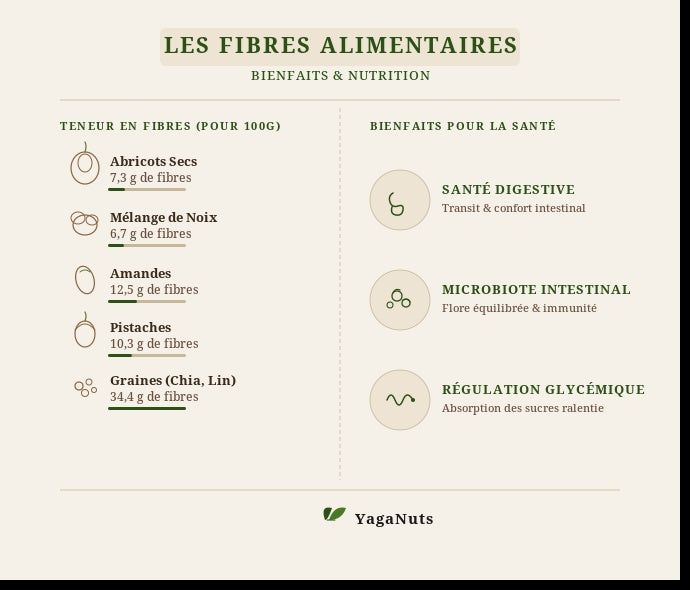
Incorporating more dietary fiber into your daily diet is a major lever for improving digestive comfort and overall health. Whether to prevent constipation, regulate blood sugar, or support the gut microbiota, understanding the role and sources of fiber-rich products helps to make informed choices within a balanced diet.
Understanding dietary fiber: definition and classification
Dietary fiber are essential plant components that are not digested in the small intestine. They come mainly from the cell walls of fruits, vegetables, whole grains, and legumes. They are distinguished into two main categories: soluble fiber, which dissolves in water and forms a gel, and insoluble fiber, which increases stool bulk and stimulates transit. Their complementarity effectively contributes to digestive health, making a diet rich in various fibers necessary.
The essential roles of fiber in the body
Fiber plays a fundamental role in regulating intestinal transit, helping to prevent constipation by increasing stool volume. They also modulate blood sugar by slowing down the absorption of sugars, which promotes better control of blood cholesterol. Their satiating effect helps control appetite, an important asset for weight management. Furthermore, fiber nourishes the gut microbiota, which strengthens immune defenses and reduces the risk of chronic diseases.
How much fiber should you consume per day?
Official recommendations in France and internationally suggest about 25 to 30 grams of dietary fiber per day for an adult. Needs vary according to age and specific situations, particularly in children or pregnant women, where adjustments are necessary. It is preferable to spread fiber consumption throughout the day and gradually increase intake to avoid digestive problems such as bloating or gas.
The best high-fiber food sources
The foods richest in fiber include fruits and vegetables, legumes such as lentils and chickpeas, as well as whole grains like whole wheat or oats. Some remarkable examples are artichokes, organic Agen prunes, rich in soluble fiber, and various seeds (chia, flax), providing a good mix of soluble and insoluble fiber. Varying food sources is essential to ensure a complete intake of dietary fiber adapted to the body's needs.
The importance of hydration associated with fiber consumption
For fiber, especially insoluble fiber, to fully play its role, sufficient hydration is essential. Drinking between 1.5 and 2 liters of water per day facilitates the softening of fiber and stimulates intestinal transit. In addition to water, unsweetened infusions, herbal teas, and naturally flavored waters are compatible with good daily hydration.
The concrete benefits of a high-fiber diet
Increasing the consumption of fiber-rich products effectively relieves constipation and improves common digestive problems. This diet optimizes intestinal transit and promotes microbiota diversity, a key factor in health. Metabolically, fiber contributes to blood sugar control, thereby participating in the prevention of type 2 diabetes. They also play a protective role against cardiovascular diseases and certain digestive cancers. Finally, the feeling of satiety they provide helps moderate appetite and facilitates weight management.
Understanding soluble and insoluble fiber: differences and specific benefits
Soluble fiber, such as that found in oats or fruits, forms a gel that slows down carbohydrate absorption, helping to regulate blood sugar. In parallel, insoluble fiber, present in whole grains and certain vegetables, exerts a mechanical effect by increasing stool volume and stimulating intestinal transit. Most foods combine these two types of fiber in varying proportions. A gradual increase in intake avoids digestive discomfort associated with too rapid adaptation of the digestive system.
How to increase your fiber intake daily?
Incorporating more fiber is done in simple steps: preferring whole grains to white bread, varying fresh fruits with crunchy vegetables, and regularly incorporating legumes and seeds into meals. Eating fruits and vegetables with their skin as much as possible naturally increases their fiber content. Slow increase in intake ensures better digestive tolerance and limits discomfort. Spreading consumption throughout the day optimizes intestinal comfort.
The role of fiber supplements: advantages and precautions
Fiber supplements target people who struggle to reach recommended intakes or who have occasional digestive problems. In powder, capsule, or soluble and insoluble mixture form, they provide temporary help. However, they never replace a balanced diet rich in natural fiber. Accompanying these supplements with adequate hydration optimizes their effectiveness on transit and microbiota. Thoughtful use ensures benefits without discomfort.
Possible side effects and how to avoid them
Too rapid an increase in fiber consumption can cause bloating, gas, or diarrhea. To minimize these problems, it is crucial to slowly increase consumption, allowing the gut microbiota to adapt. Parallel water consumption is also recommended. In reality, the majority of people suffer more from a fiber deficiency than from an excess. Recognizing the signs of discomfort allows you to adjust your intake to maintain lasting digestive well-being.
High-fiber foods to prioritize for breakfast
Starting the day with fiber-rich foods promotes good transit and sustained energy intake. Whole grains, supplemented with fresh or dried fruits such as organic Agen prunes, as well as seeds and nuts among our organic natural products, constitute a balanced choice. These foods are ideally combined with dairy products or their plant-based alternatives for a complete and nutritious breakfast.
Dietary fiber and gut microbiota: an essential relationship
Dietary fiber serves as a substrate for beneficial bacteria in the gut microbiota. This fermentation produces short-chain fatty acids, which strengthen the intestinal barrier and improve the immune response. A diversified flora, supported by a varied fiber diet, participates in the prevention of inflammatory and metabolic diseases, thus consolidating overall health.
Practical tips for successfully integrating fiber into a balanced diet
To preserve fiber, prioritize minimally processed foods and steam or gently cook fruits and vegetables. Opting for healthy snacking with fiber and antioxidant-rich nuts, almonds, or pistachios is an excellent habit. Staying well hydrated and patient during the gradual increase in intake facilitates digestive adaptation. Learning to read labels to choose high-fiber products ensures a positive impact on health.
Key areas for a successful high-fiber diet
A varied fiber diet, with a well-distributed daily quantity, promotes a balance between soluble and insoluble fiber. Adherence to recommendations, combined with sufficient hydration, ensures digestive comfort and metabolic benefits. Adopting these nutritional reflexes allows you to fully exploit the potential of dietary fiber for lasting vitality.


Laat een reactie achter
Deze site wordt beschermd door hCaptcha en het privacybeleid en de servicevoorwaarden van hCaptcha zijn van toepassing.